
July 11, 2026
How to Take Care of Ceramic & Porcelain Tile Backsplashes
A simple, complete guide to cleaning and protecting a tile backsplash — daily care, grease buildup, grout, and the products that will quietly ruin it.
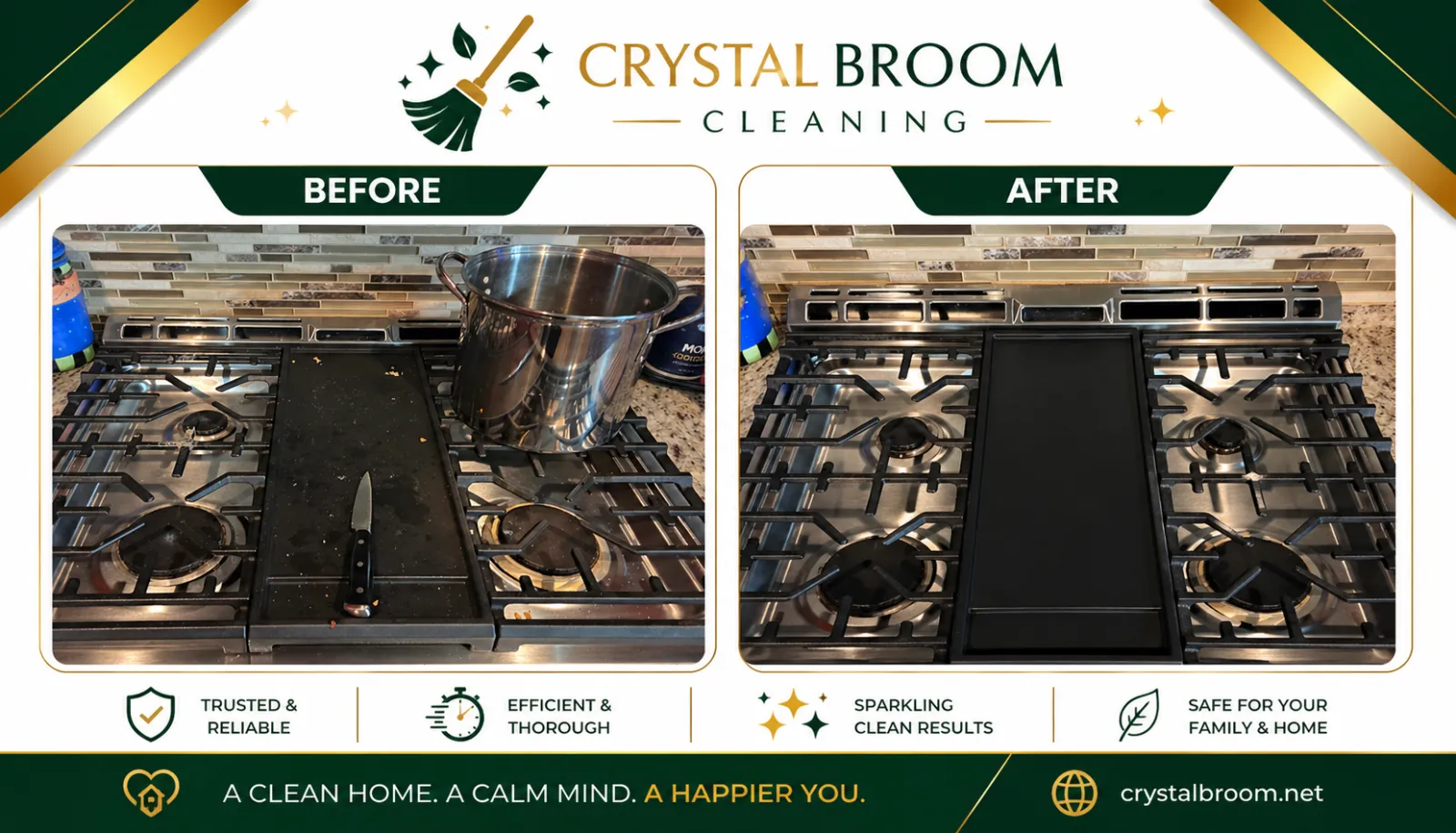
A backsplash is one of the hardest-working surfaces in your kitchen, and one of the easiest to damage by cleaning it the wrong way.
I see this constantly. Someone scrubs grease off their tile with an abrasive pad, and it works — but it also puts fine scratches in the glaze that hold dirt even faster next time. A year later the backsplash looks permanently dull, and no product fixes it.
So here's the whole approach, start to finish.
Daily Care
- Wipe with a soft microfiber cloth and warm water.
- Use a mild dish soap solution for grease and food splatters.
- Dry with a clean cloth to prevent water spots.
That's it. Most backsplashes never need more than this if you stay ahead of it.
For Grease Buildup
Grease is the main reason a backsplash starts looking tired, especially behind the stove.
- Mix warm water with a few drops of dish soap.
- Gently scrub using a soft sponge or microfiber cloth.
- Rinse with clean water and dry thoroughly.
The trick is dwell time, not pressure. Let the soapy water sit on the grease for a minute before you wipe. It does the work so you don't have to scrub — and scrubbing is what damages the finish.
Cleaning Grout
Grout is porous, which is why it discolors first even when the tile still looks fine.
- Use a soft brush and a mixture of baking soda and water.
- Scrub gently to avoid damaging grout.
- Rinse and wipe dry.
Be honest with yourself about grout: some staining is permanent, and no product is going to change that. If it has been years, a deep clean will get it as far as it can realistically go.
What to Use
- Microfiber cloths
- Soft sponges
- Mild dish soap
- pH-neutral tile cleaners
- Soft-bristle brushes for grout
What NOT to Use
- Steel wool or abrasive scrubbers
- Harsh scouring powders
- Bleach on colored grout (unless manufacturer-approved)
- Strong acidic cleaners used repeatedly
- Metal scrapers or razor blades
This list matters more than the first one. The damage from these is cumulative and permanent — you usually don't notice it until the tile has lost its sheen for good.
The Honest Version
If you wipe your backsplash down while you're already cleaning the counters, you will almost never need to do anything else to it. The homes where I find baked-on grease are the ones where the backsplash got treated as a once-a-year job instead of a ten-second one.
If your kitchen has gotten ahead of you, that's exactly the kind of thing we handle on a recurring clean — the stove, the backsplash, the cabinet fronts, every visit, so it never builds up in the first place.
While You're There: Cabinet Fronts
The cabinets right next to the stove collect the same airborne grease your backsplash does, and almost nobody thinks to clean them until they feel tacky.
- Use a soft microfiber cloth and warm water mixed with a few drops of mild dish soap.
- Wipe cabinet doors, handles, and drawer fronts from top to bottom, paying extra attention to areas near the stove.
- Dry immediately with a clean microfiber cloth to prevent streaks and moisture damage.
Once a month is enough to keep them from ever getting to the sticky stage.